MarTech Reports Personalization Struggles To Recognize Customers
Personalization programs often fail to make customers feel known, MarTech reports. This limitation matters because it can lead to intrusive offers and lost sales.
Original reporting · martech.org
Original: “Personalization knows what customers want, not who they are”
Read “Personalization knows what customers want, not who they are” at MarTech →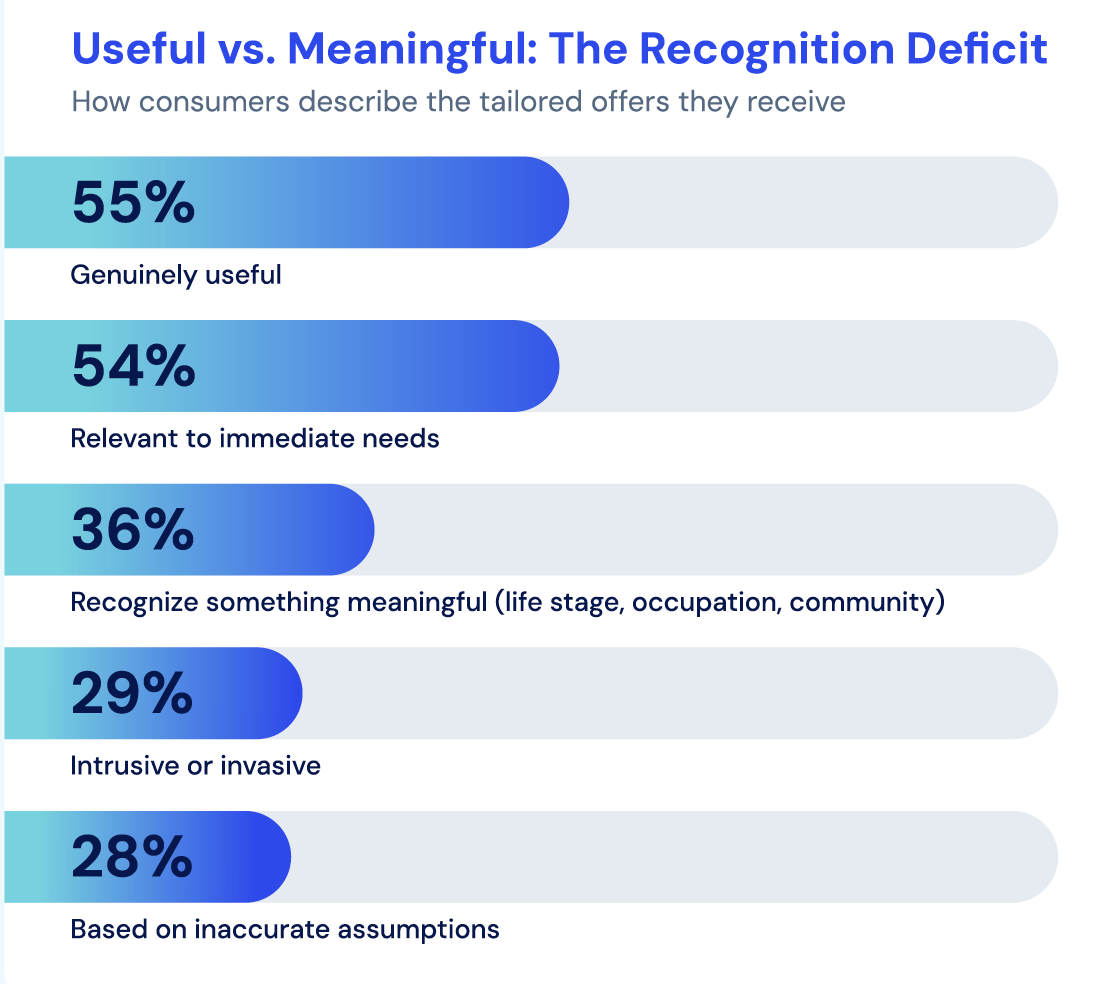
How this was written. 1to1 wrote this article with a language model from MarTech’s reporting (model: @cf/meta/llama-3.3-70b-instruct-fp8-fast); it describes that reporting rather than adding to it. The original, linked above, is the full story.
Key points from MarTech’s report
- Personalization programs often struggle to recognize customers and make them feel known.
- Consumers consider tailored offers useful, but many do not feel that these offers recognize something meaningful about them.
- Marketers need to balance inference with consent-based attributes to create effective personalization programs.
Personalization is effective at guessing what customers might want, but it often fails to make them feel like the brand knows who they are, according to MarTech. This is a significant problem in many personalization programs. Research from SheerID and Censuswide found that while 55% of consumers consider tailored offers useful, only 36% said these offers often recognize something meaningful about them, such as their job or life stage.
MarTech reported that nearly three in 10 consumers said personalized offers feel intrusive, and a similar share said they are based on inaccurate assumptions. This can happen even when the recommendation engine has access to a customer's browsing history, as it may not know important details about the customer. For example, it may know a customer looked at laptops, but not that they are a student or a healthcare worker.
The difference between relevance and true personalization is crucial, MarTech noted. Marketers have become skilled at making offers feel relevant in the moment using inference, but consumers want more. Thirty percent of consumers prefer a mix of inferred and consent-based attributes, while 28% prefer inference alone and 26% prefer consent-based attributes alone. This suggests that marketers need to know when to use guessing and when to ask for more information.
Questions and answers
What is the main problem with personalization programs?
The main problem is that they often fail to make customers feel like the brand knows who they are, according to MarTech.
How do consumers feel about personalized offers?
Many consumers feel that personalized offers are intrusive or based on inaccurate assumptions, MarTech reported.